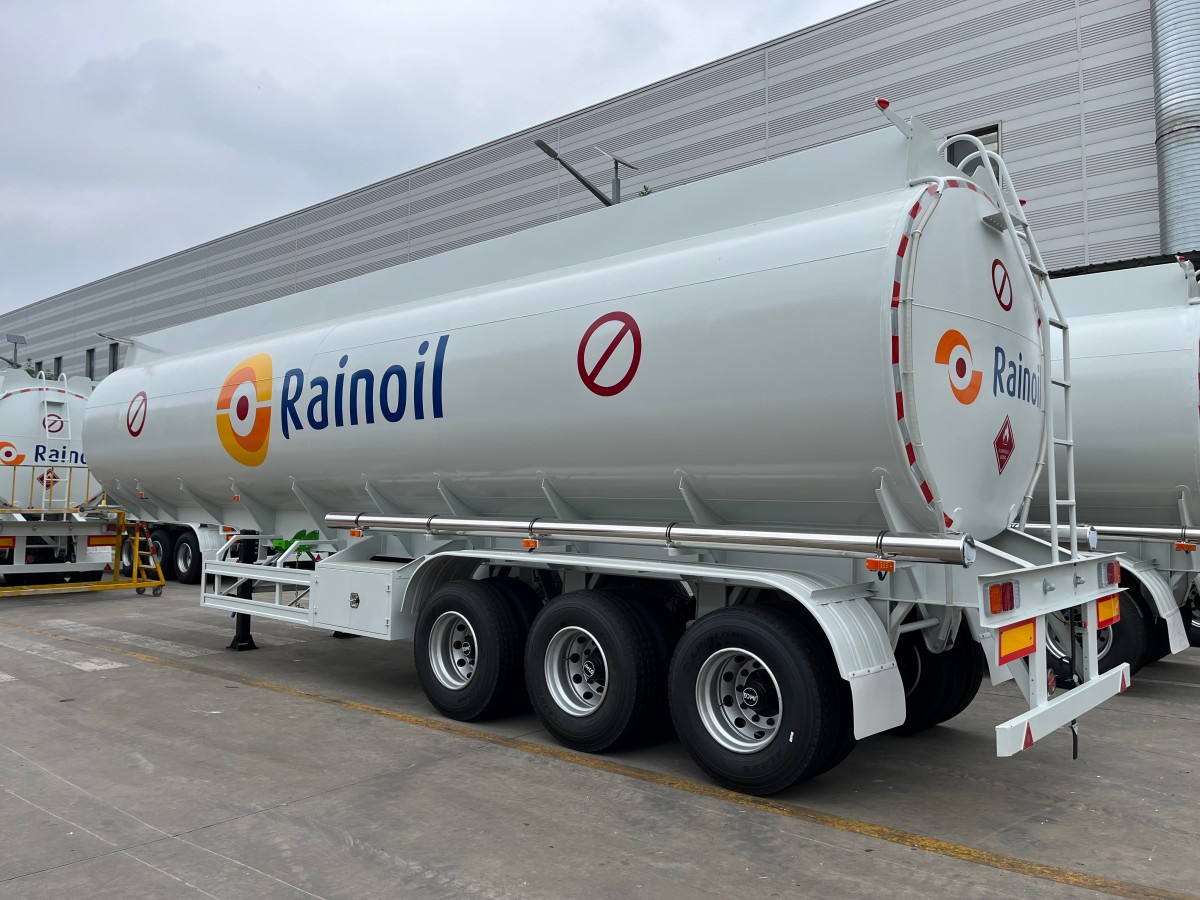

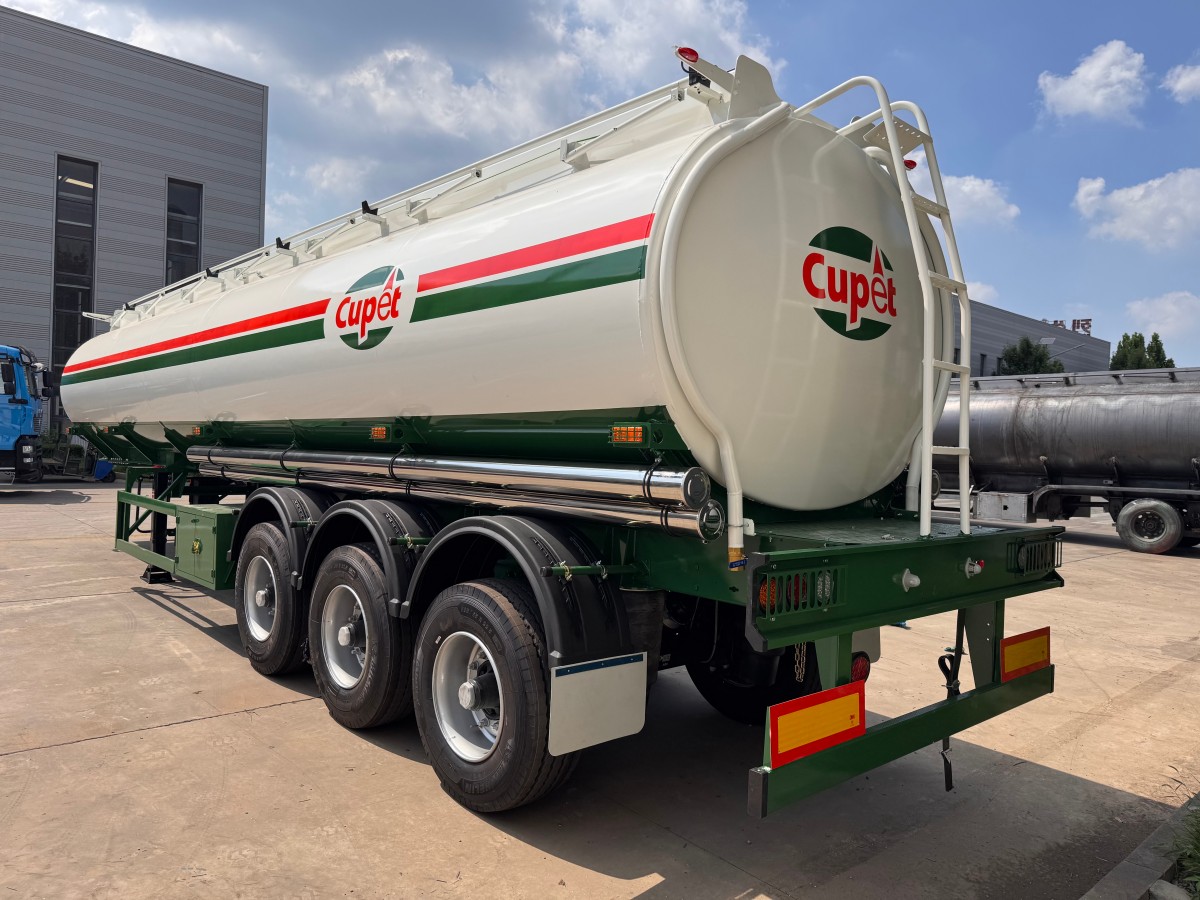
An oil tanker trailer is one of the highest-investment trailer types in any fleet – typically 50-100% more expensive than a comparable flatbed. Choosing the wrong tank material can lead to corrosion, cargo contamination, regulatory issues, and reduced resale value. This guide breaks down the three most common materials and helps you select the right one for your specific fuel haulage operation.
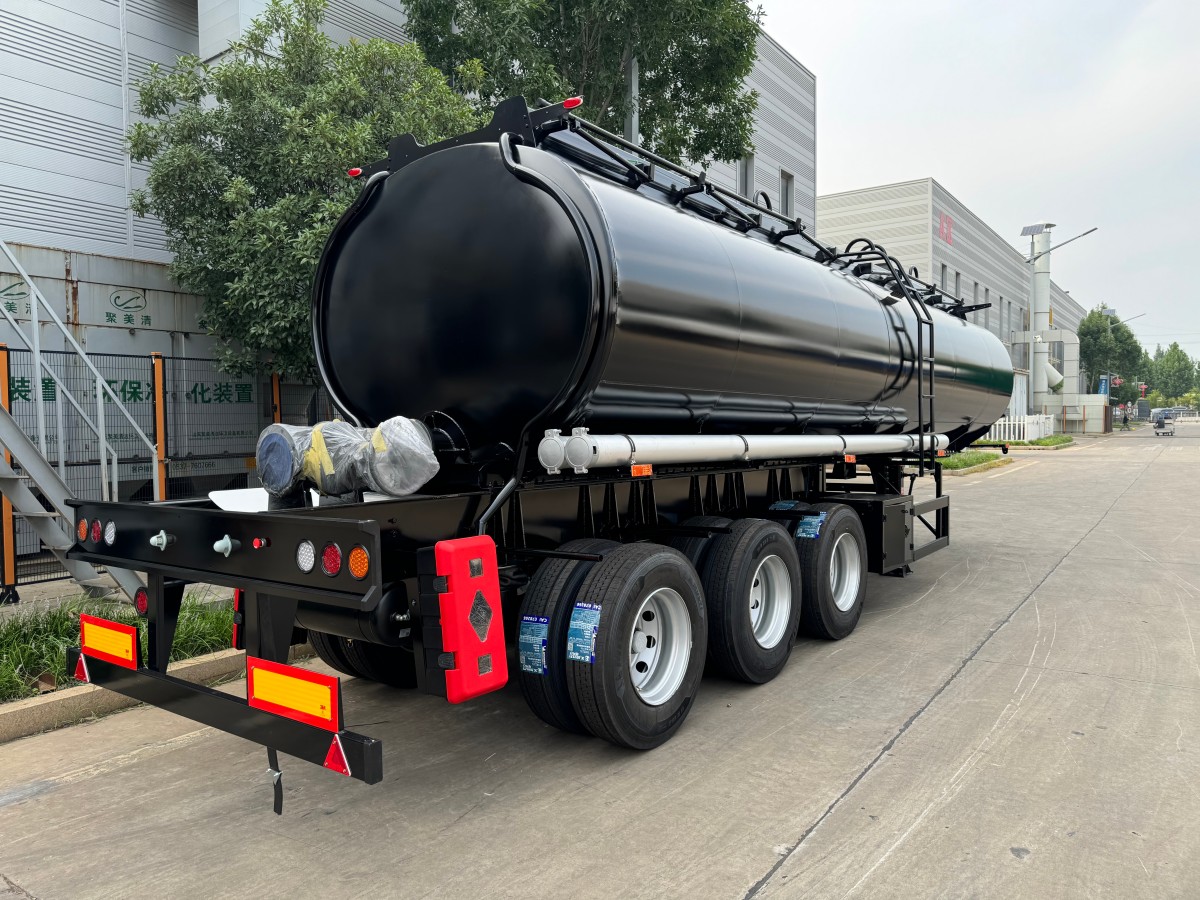
The Three Main Tank Materials
Carbon Steel (Q345B / ASTM A572)
Best for: Diesel, gasoline, kerosene, fuel oil – non-corrosive petroleum products
Wall thickness: 5-6mm shell, 6-8mm head
Tank weight (40,000L): ~4,800 kg
Typical FOB price: $18,000 – $26,000 (40,000L, 3-axle)
Carbon steel is the workhorse of the oil tanker trailer industry. It’s strong, weldable, repairable in the field, and the cheapest option per liter of capacity. Most petroleum products are compatible with carbon steel when proper anti-corrosion treatment is applied to the interior.
Advantages:
- Lowest purchase price (typically 20-30% below aluminum)
- Field-repairable by qualified welders
- Wide availability of parts and accessories
- Suitable for virtually all non-corrosive petroleum products
Disadvantages:
- Heavier than aluminum – reduces payload capacity by 800-1,200 kg per trailer
- Requires interior anti-corrosion coating that must be inspected every 2-3 years
- Coating failure leads to rust contamination of fuel
- Higher fuel consumption due to increased tare weight
Aluminum Alloy (5083 / 5454 / 5182)
Best for: Diesel, gasoline, jet fuel, kerosene – applications where weight reduction matters
Wall thickness: 5-6mm shell
Tank weight (40,000L): ~3,400 kg (about 30% lighter than carbon steel)
Typical FOB price: $24,000 – $38,000 (40,000L, 3-axle)
Aluminum alloy is the preferred material for fuel haulage operations where regulatory payload limits or fuel economy make weight reduction critical. In Europe, Middle East, and increasingly African markets, aluminum tankers are becoming standard for international fuel transport.
Advantages:
- 30-40% lighter than carbon steel – significant payload gain
- Natural corrosion resistance – no coating needed
- Higher resale value, especially in EU markets
- ADR (European Agreement concerning the International Carriage of Dangerous Goods by Road) compliant when properly specified
- Lower fuel consumption (lighter trailer)
Disadvantages:
- Higher purchase price (typically 25-50% above carbon steel)
- More expensive to repair – requires certified aluminum welders
- Not suitable for all cargoes (avoid high-sulfur crude, certain additives)
- More susceptible to damage from impact
Stainless Steel (SS304 / SS316L)
Best for: Food-grade oils, lubricants, mild chemicals, pharmaceuticals, cosmetics
Wall thickness: 4-5mm shell
Tank weight (40,000L): ~4,200 kg
Typical FOB price: $28,000 – $45,000 (40,000L, 3-axle)
Stainless steel is the premium choice for tanker trailers handling high-purity cargoes. SS304 is the standard for food-grade applications (palm oil, soybean oil, sunflower oil, milk). SS316L is required for pharmaceutical and chemical cargoes where chloride resistance is critical.
Advantages:
- Highest cargo purity – no metal leaching or contamination
- Polished interior (Ra <= 0.8 micrometers) for hygienic transport
- CIP (clean-in-place) compatible for easy sanitization
- Excellent corrosion resistance
- Highest resale value for specialized cargoes
Disadvantages:
- Highest purchase price (typically 50-80% above carbon steel)
- Heavier than aluminum
- Specialized welding and repair required
- Overkill for standard petroleum transport
Material Selection by Cargo Type
| Cargo Type | Recommended Material | Rationale |
|---|---|---|
| Diesel / Gasoline / Kerosene | Carbon steel or aluminum | No corrosion issue, weight determines choice |
| Jet fuel (aviation) | Aluminum alloy (5083) | Mandatory cleanliness, weight reduction |
| Lubricating oil | Carbon steel | No contamination concern |
| Crude oil | Carbon steel (with coating) | Cost-effective for low-margin cargo |
| Palm oil / Vegetable oil | Stainless steel (SS304) | Food-grade hygiene required |
| Sulfuric acid (concentrated >=70%) | Carbon steel | Forms protective sulfate layer; SS would corrode |
| Sulfuric acid (dilute) | Stainless steel (SS316L) or lined carbon steel | Dilute acid attacks carbon steel rapidly |
| Sodium hydroxide (caustic soda) | Carbon steel | Compatible up to ~70% concentration |
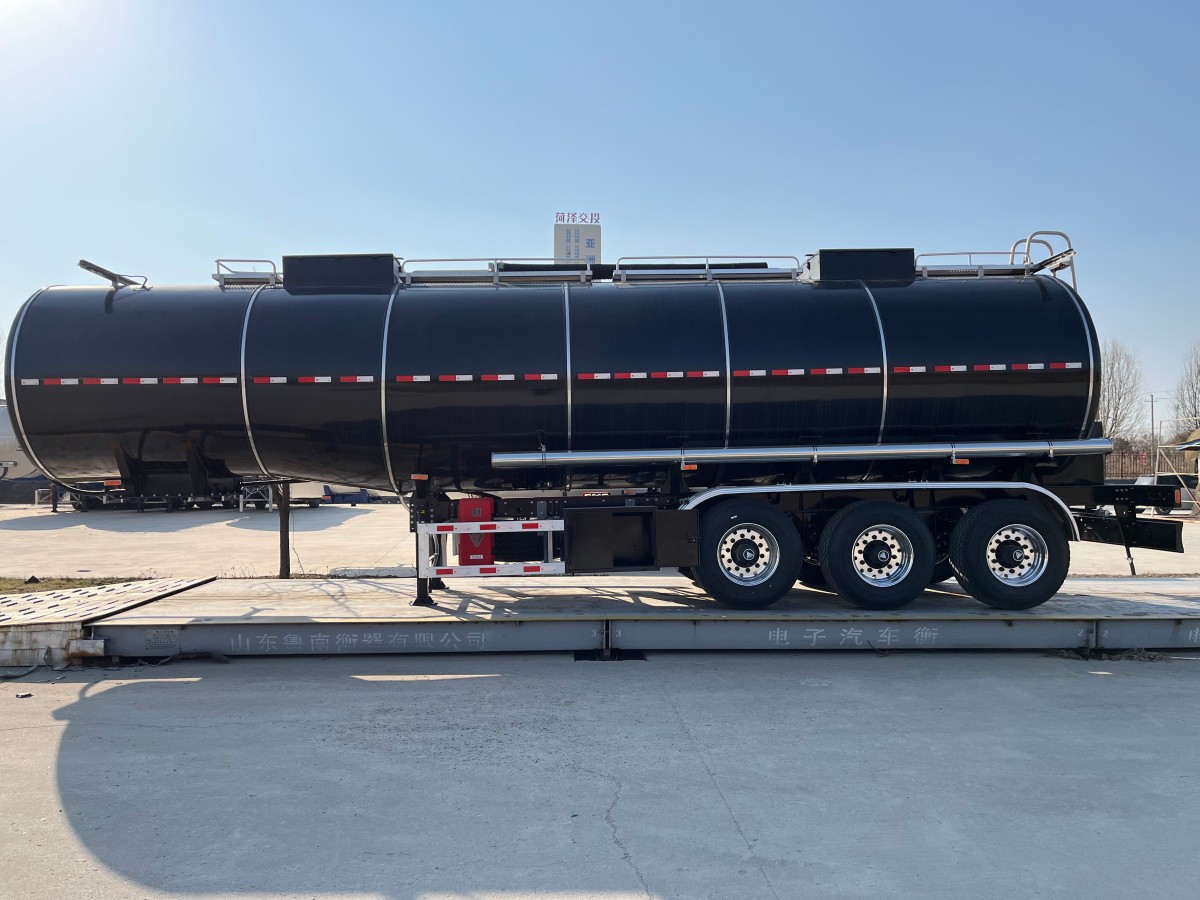
| Bitumen / Asphalt | Carbon steel with insulation and heating | High operating temperature, special design |
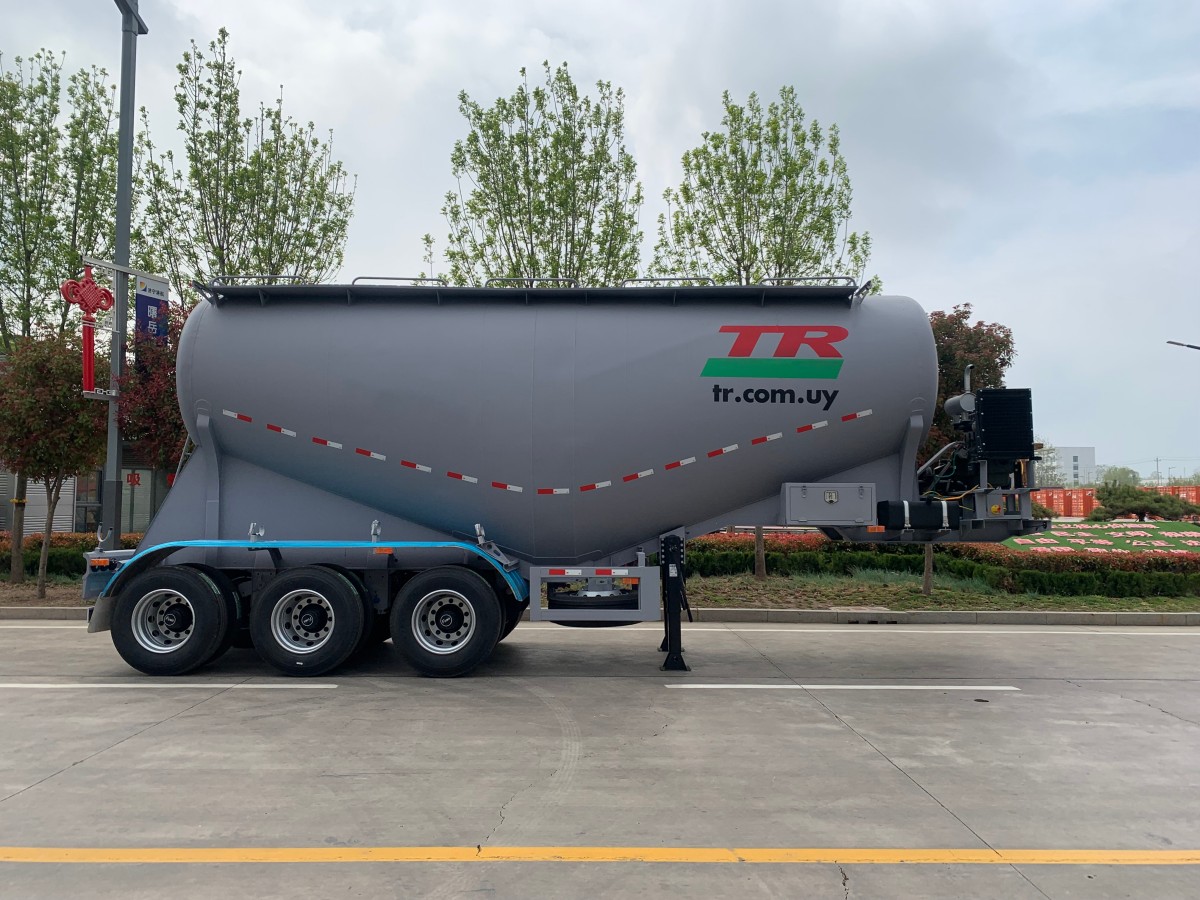
| Bulk cement / fly ash | Carbon steel (V-shaped) | Pneumatic discharge requires V-shape |
Critical Specifications to Verify
Tank Construction
- Shell thickness: Carbon steel >= 5mm, aluminum >= 5mm, stainless >= 4mm
- Head (end cap) thickness: Carbon steel >= 6mm
- Welding: Full penetration welds, X-ray tested at 100% on critical seams
- Anti-corrosion treatment (carbon steel): Sand-blast to SA 2.5, epoxy primer, polyurethane top coat
Manholes and Valves
- Manhole: 500mm diameter minimum, quick-open, emergency venting
- Bottom valve: Pneumatic or hydraulic operated, bottom-loading compatible
- Emergency valve: 4 inch or larger, fire-safe, auto-closing on rollover
- Vapor recovery: Required in some jurisdictions for gasoline transport
Safety Equipment
- Anti-static system: Grounding reel + anti-static strip + bonding cable
- Fire extinguisher boxes: 2 boxes minimum, with ABC dry powder extinguishers
- Spill containment: Drip trays under valves
- Rear bumper: Required by ADR and most national regulations
Compartments and Capacity
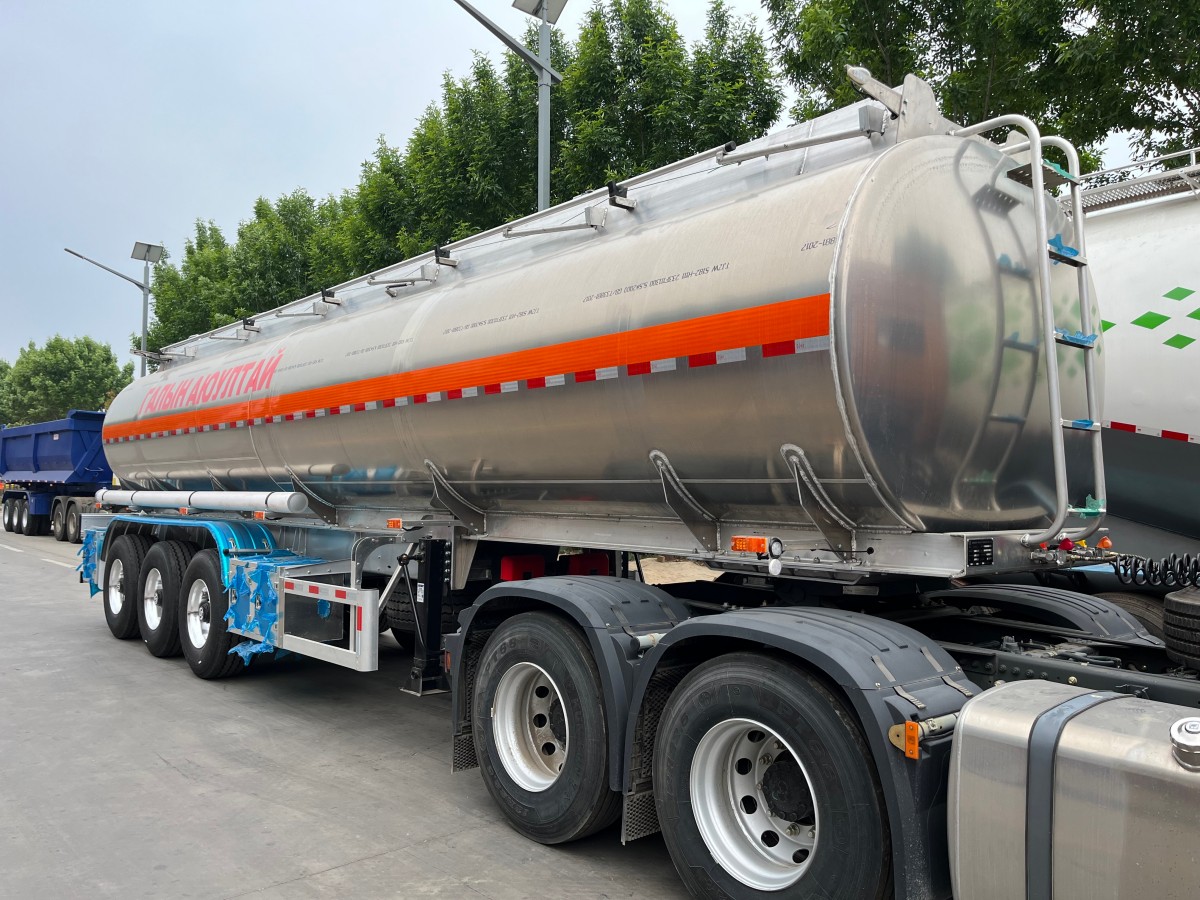
Most oil tankers are divided into multiple compartments to allow simultaneous transport of different fuel grades or to comply with axle load distribution:
- 4 compartments (standard): Allows 4 different products or 4 sequential deliveries
- 5-6 compartments: For multi-grade operations (e.g., diesel + gasoline + kerosene)
- Single compartment: For dedicated single-product fleets (e.g., aviation fuel)
Compliance Standards
Depending on your destination country, your tanker trailer may need to comply with:
- ADR (European Agreement): Required for all EU countries and most countries following EU standards
- GB 18564 (China): Domestic Chinese standard
- ADR / RID / IMDG / IATA / ADN: For multi-modal transport
- SANS / KEBS / SON / SABS: National standards in African countries
Confirm with your seller which standard their tanker is built to. A “European standard” tanker typically commands a 15-25% price premium over a basic Chinese-domestic-spec unit.
Operating Cost Comparison (Annual, 100,000 km/year)
| Cost Component | Carbon Steel | Aluminum | Stainless Steel |
|---|---|---|---|
| Tare weight (40,000L) | 4,800 kg | 3,400 kg | 4,200 kg |
| Payload per trip | ~32 tons | ~34 tons | ~33 tons |
| Annual fuel (extra from tare) | Baseline | -8% fuel cost | -3% fuel cost |
| Tank recoating (every 4 years) | $3,500-5,000 | $0 | $0 |
| Repairs (5-year avg) | $1,500 | $800 | $1,200 |
Decision Framework
Use this checklist to choose your tank material:
- What cargo will you haul? Petroleum products -> carbon steel or aluminum. Food-grade or chemicals -> stainless steel.
- What is the regulatory weight limit in your country? Strict GVW limits favor aluminum (lighter tare weight = more payload).
- What is your typical annual distance? Over 80,000 km/year -> aluminum pays back the premium through fuel savings.
- What is your destination region? EU exports require ADR-compliant aluminum or stainless.
- What is your resale horizon? Over 7 years -> aluminum or stainless have stronger resale markets.
Conclusion
For most petroleum haulage operations, aluminum alloy offers the best combination of payload, durability, and long-term operating cost – particularly for fleet operators serving international markets. Carbon steel remains the right choice for cost-sensitive operations and dedicated single-product fleets. Stainless steel is mandatory for food-grade, pharmaceutical, or specialty chemical transport where cargo purity is non-negotiable.
Need help matching the right tank material to your cargo and operating region? Contact our engineering team with your cargo type, destination country, and annual mileage – we’ll recommend the optimal specification.
See Related Products
- Carbon Steel Oil Tanker Trailer
- Aluminum Alloy Tanker Semi Trailer
- Stainless Steel Oil Tanker Trailer
Need a Quotation? Contact Our Export Team
Browse our full catalog, search for specific models, or send us your requirements. Our sales engineers respond within 12 hours.
Phone: +86 13113678017 | Email: postmaster@trailerintl.com