Semi trailer pricing varies dramatically between manufacturing regions, and the gap has widened over the past decade. **As a Chinese OEM with annual production exceeding 30,000 units exported to over 40 countries**, we frequently receive requests for pricing comparisons. This analysis presents the real cost structure, not the surface sticker price.
The 2026 Pricing Reality
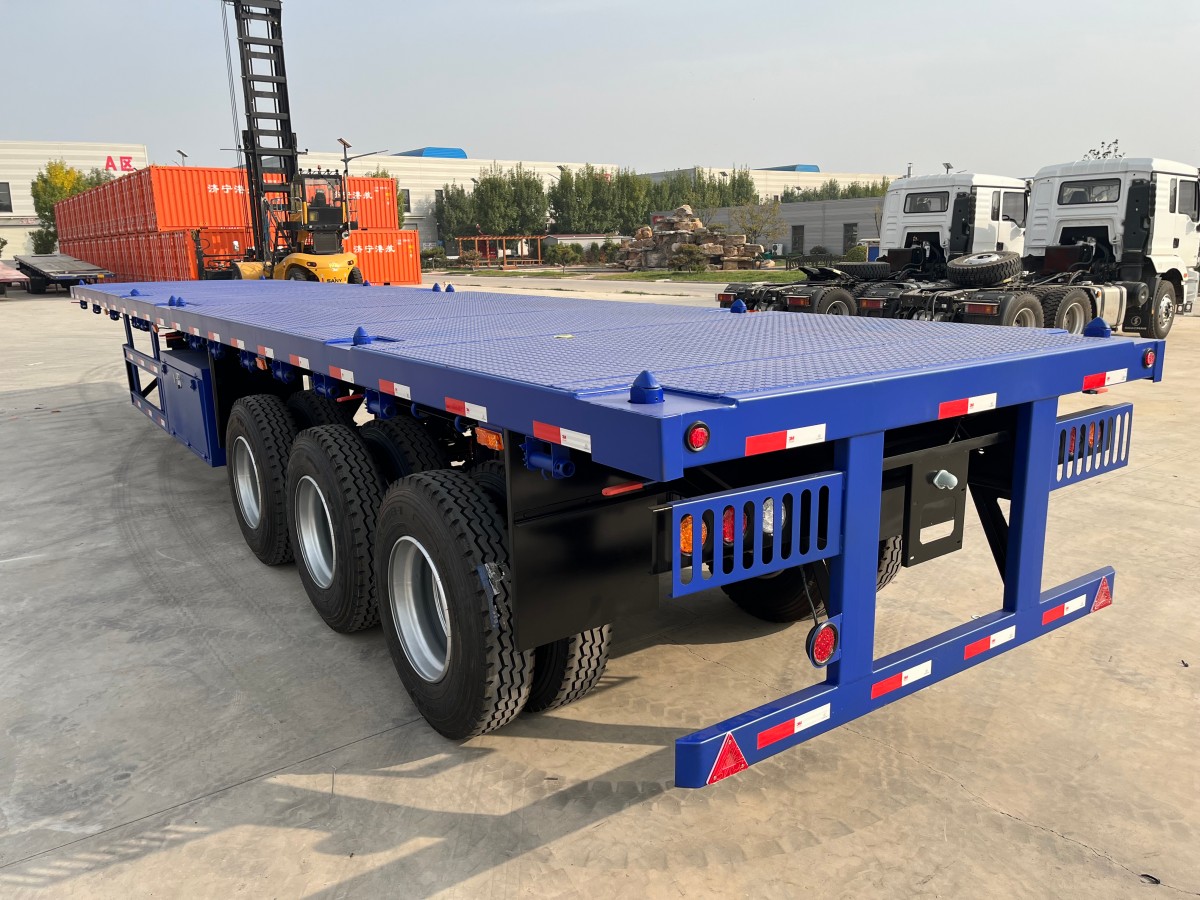
For a standard 3-axle 40ft flatbed semi trailer with comparable specifications (BPW 13-ton axles, mechanical suspension, WABCO brake system, 12R22.5 tires):
| Region of Manufacture |
FOB Price (USD) |
Compared to China |
| China (established OEM) |
$11,000-14,000 |
100% (baseline) |
| China (mid-tier) |
$9,000-11,000 |
82-90% |
| Turkey |
$18,000-22,000 |
164-200% |
| Eastern Europe (Poland, Romania) |
$18,000-23,000 |
164-209% |
| Western Europe (Germany, Netherlands) |
$22,000-28,000 |
200-255% |
| North America (USA) |
$24,000-30,000 |
218-273% |
These are based on actual market transactions our company and competing OEMs have executed in 2025-2026, not aspirational pricing.
Why the Gap Exists
Three structural factors explain the pricing difference:
1. Steel and Component Costs
China’s steel industry is the world’s largest, and Liangshan specifically has multiple steel plate distributors within the manufacturing cluster. This means:
- Lower raw material costs (10-15% below international benchmark)
- Lower transportation costs (5-10 minutes from plate distributor to factory)
- Lower inventory carrying costs (just-in-time supply)
Component costs (axles, brakes, tires) are similar across regions, as most established brands (BPW, FUWA, WABCO, Michelin, Continental) have global pricing strategies. The advantage comes from local assembly scale.
2. Labor Costs and Productivity
While Chinese labor costs have risen significantly over the past decade, the productivity gap has narrowed through specialization:
- Liangshan workers specialize in trailer welding, with most having 5+ years of experience
- Factory layouts have evolved for efficient flow production
- Lower supervisory overhead per worker in high-volume operations
Our company, with annual production exceeding 30,000 units, achieves a labor cost per trailer that is 40-60% lower than European manufacturers, even after adjusting for productivity differences.
3. Overhead and Regulatory
European and American manufacturers carry substantial overhead:
- Higher facility costs (real estate, insurance, energy)
- Stricter regulatory compliance (environmental, safety, labor)
- Higher management and administrative overhead
- Smaller production scale relative to overhead
Where Chinese OEM Costs Are Not Lower
To be transparent, not everything is cheaper with Chinese OEM:
- Components from European brands (BPW axles, WABCO brakes, JOST coupling) cost the same worldwide
- Shipping cost is added to FOB price (typically $1,800-2,500 for a 40ft container)
- Import duties vary by destination country (0-35%)
- Financing cost during 30-45 day production is similar to other regions
The savings are concentrated in material handling, labor, and overhead, not in premium components.
Real Total Cost of Ownership Comparison
For a 5-year operating period with 100,000 km/year usage:
| Cost Component |
China OEM |
European |
American |
| Purchase price (landed) |
$15,000 |
$25,000 |
$28,000 |
| Tire replacement (2 cycles) |
$4,800 |
$4,800 |
$4,800 |
| Brake maintenance (5 years) |
$1,200 |
$1,500 |
$1,800 |
| Repainting (1 cycle) |
$2,000 |
$3,000 |
$3,500 |
| Downtime (estimated) |
$1,500 |
$1,000 |
$1,000 |
| 5-year TCO |
$24,500 |
$35,300 |
$39,100 |
Over 5 years, the China OEM option saves 30-37% in total cost compared to European or American alternatives, even with all operating costs included.
What About Warranty and Service?
Concerns about warranty and after-sales support for Chinese OEM purchases are legitimate but increasingly outdated. Established Chinese OEMs now provide:
- 12-month warranty on structural components (main beam, axles, suspension)
- Spare parts supply through global distribution networks
- Video-based troubleshooting for common maintenance issues
- Direct technical support via WhatsApp and email
For an operation sourcing from a manufacturer that ships 30,000+ units annually to 40+ countries, the support network is already established and proven.
When Not to Choose Chinese OEM
Despite the cost advantage, Chinese OEM is not the right choice for every situation:
- Very small volume purchases (less than 3 units) where shipping cost per unit is high
- Specific European certifications required (some countries require EU type approval for road registration)
- Operations without capacity to manage overseas supplier relationships
- Applications requiring specific brand recognition (some premium freight customers)
For typical logistics operations needing 3+ units annually, the cost-quality balance of established Chinese OEMs is hard to match. Our 30,000+ units annual production and 40+ country export footprint demonstrates the maturity of this supply option for the global market.