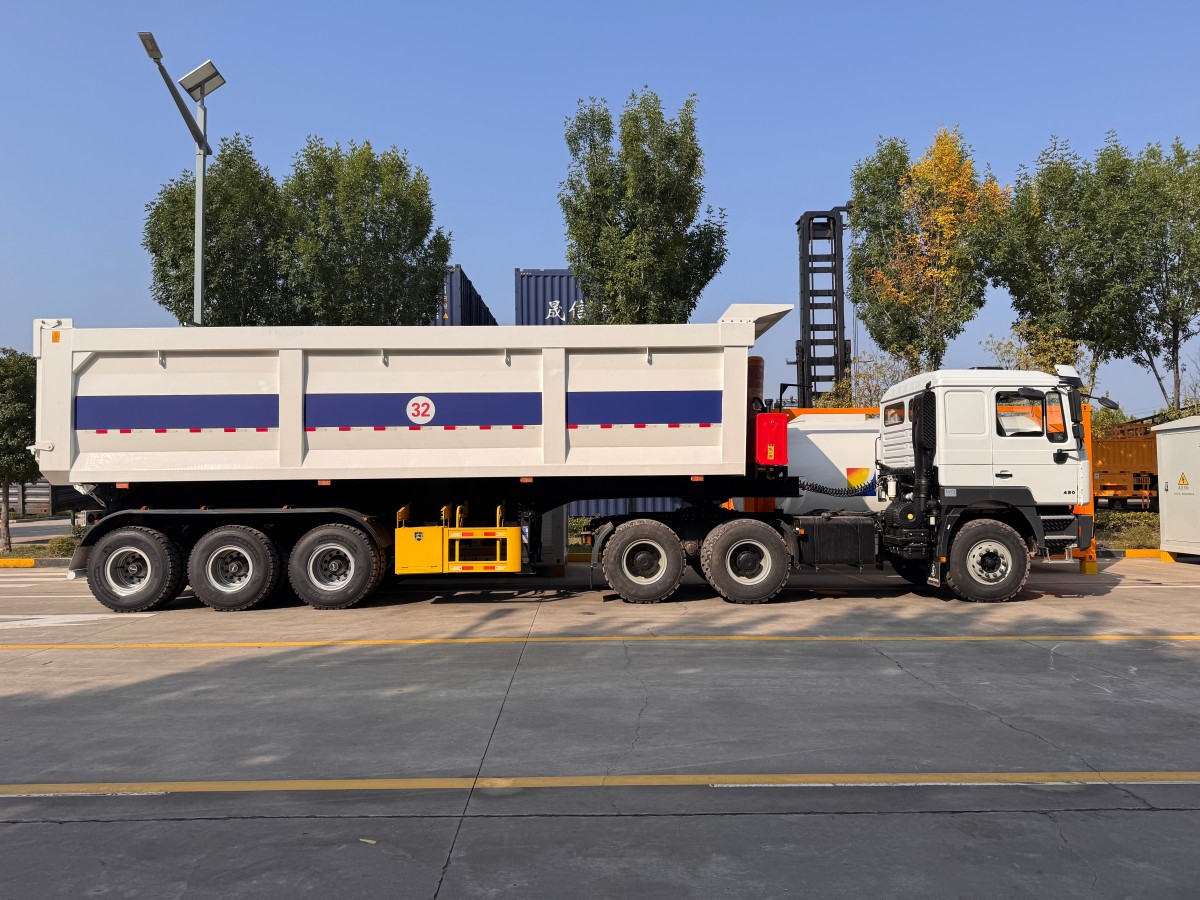
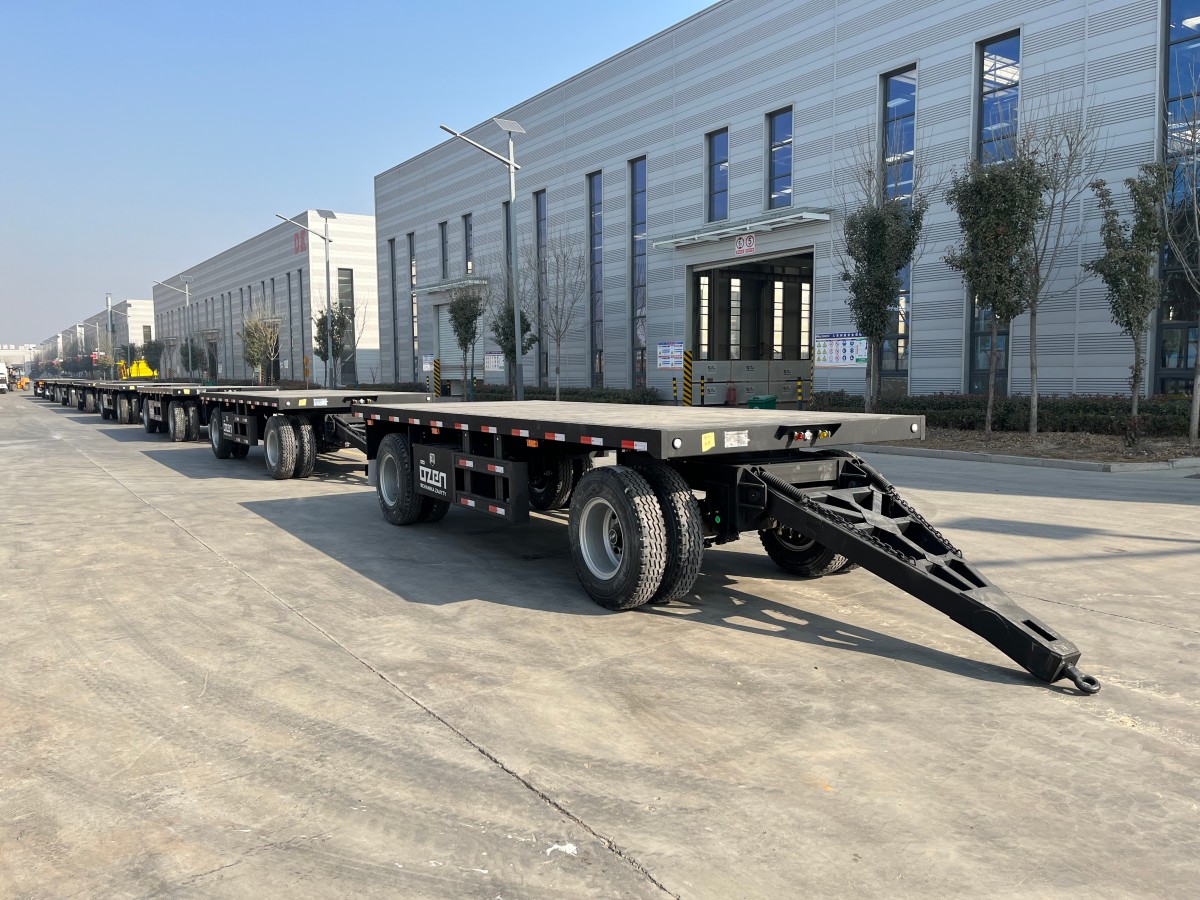
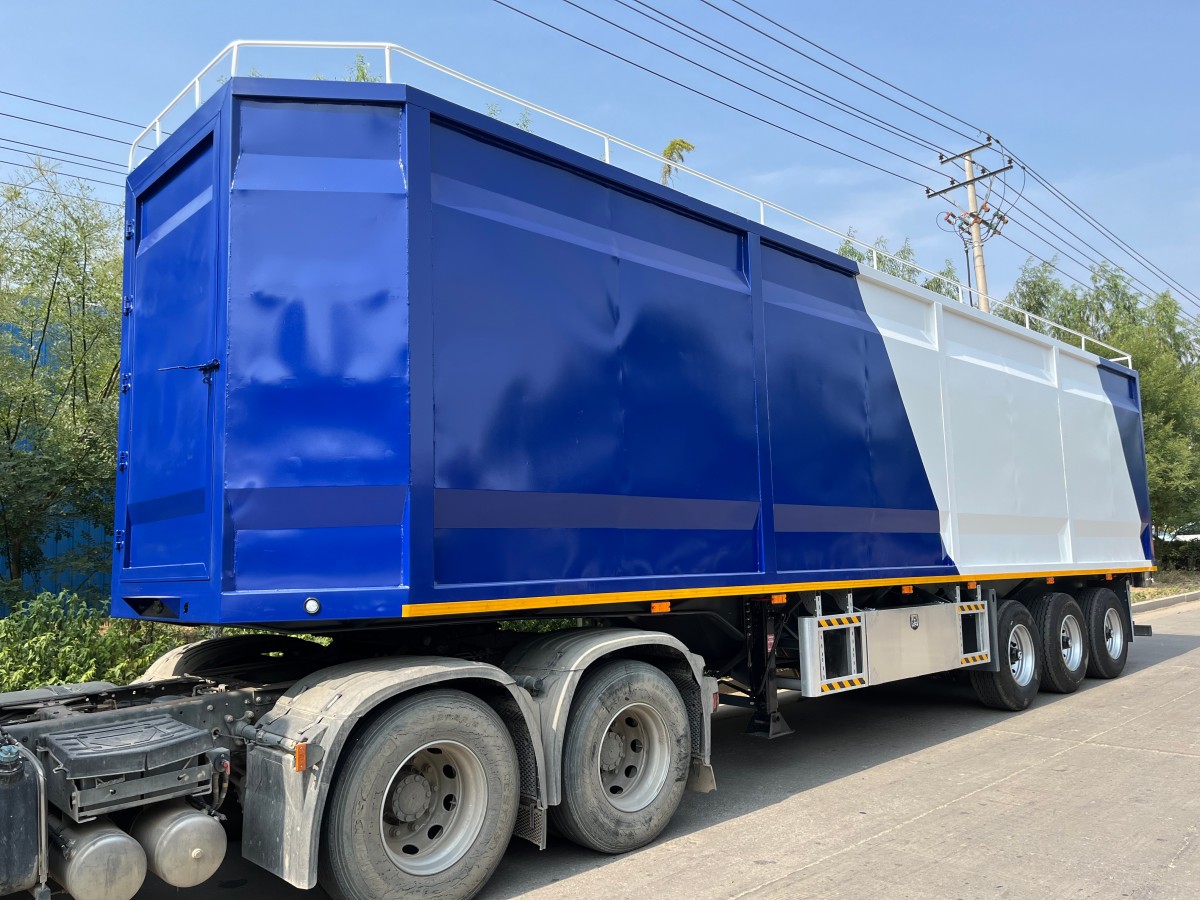
The choice between a container chassis (skeletal trailer) and a flatbed trailer for intermodal logistics is not always obvious. Both serve similar purposes, but the operational details differ significantly. **Drawing on logistics operations supporting 30,000+ trailer shipments annually between Chinese export hubs and 40+ destination countries**, we can offer practical guidance on which configuration suits which operation.
This article examines the trade-offs across cost, versatility, and operational efficiency.
What Each Trailer Does Best
Container Chassis (Skeletal Trailer)
A container chassis has a skeletal frame with twist locks at the corners and optionally at mid-points. The container itself forms the load-bearing surface during transport. Key characteristics:
- Designed specifically for ISO 20ft, 40ft, or 45ft containers
- Lower tare weight (typically 3,800-5,200 kg vs flatbed 5,500-7,000 kg)
- Higher payload (3,000-5,000 kg more than equivalent flatbed)
- Limited versatility: cannot transport palletized general cargo
- Faster container loading/unloading (no lashing required for most cargo)
Flatbed Trailer
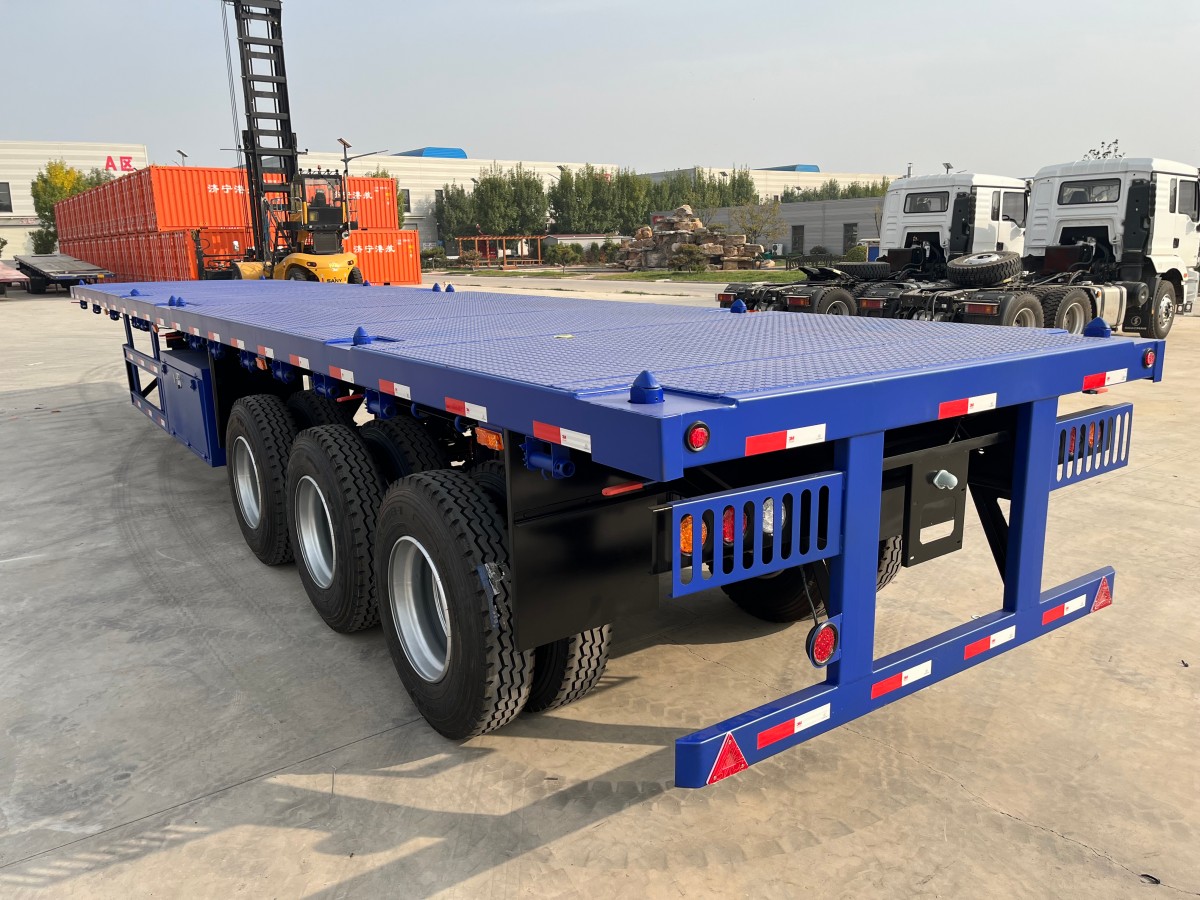
A flatbed has a solid deck surface (typically 3mm checkered plate) for general cargo. It can also carry containers if twist locks are fitted. Key characteristics:
- Versatile: palletized cargo, bagged goods, machinery, construction materials, containers
- Higher tare weight (3mm deck plate + cross members)
- Lower payload than container chassis
- Requires lashing for most cargo (straps, chains, edge protection)
- Slower loading/unloading
Cost Comparison
For a typical 3-axle 40ft configuration:
| Specification |
Container Chassis |
Flatbed |
| Tare weight |
4,500 kg |
6,200 kg |
| Payload (40 ton gross) |
35,500 kg |
33,800 kg |
| FOB price (3-axle) |
$11,500-13,500 |
$11,000-14,000 |
| Container loading time |
8-12 minutes |
25-35 minutes |
| General cargo capability |
No |
Yes |
The purchase prices are remarkably similar, but the operational differences are substantial.
When Container Chassis Wins
Container chassis is the right choice when your operation has these characteristics:
- Port drayage focus: Moving containers between port, depot, and customer locations
- Dedicated container routes: Consistent back-and-forth between port and inland destinations
- High utilization: Multiple loads per day, especially in port-adjacent operations
- Regulatory compliance: Some jurisdictions require chassis for specific container types
The 1,500-2,000 kg weight advantage translates directly to revenue: at typical freight rates, that extra capacity pays for the chassis premium within 2-3 years.
When Flatbed Wins
Flatbed is the right choice for diversified logistics operations:
- General cargo: Mixed loads of palletized goods, machinery, construction materials
- Project cargo: Oversized items, construction equipment, irregular dimensions
- Flexibility: When your customers have varied needs beyond container transport
- Versatility: Single fleet that can handle multiple cargo types
Common Configurations in International Markets
Across the 40+ countries we serve, the typical fleet composition varies by market:
Port-Adjacent Drayage Operations
Typically 100% container chassis. The 40ft single-chassis configuration is most common, with a 20ft single-chassis for empty container repositioning.
Inland Container Transport
Mixed fleets, with container chassis as the primary units (60-80%) and flatbed for non-container loads (20-40%).
Mixed Logistics Operations
Flatbed is typically 60-80% of the fleet, with container chassis as supplementary units for customers with regular container freight.
Specialized Industrial Transport
Heavy-duty flatbed or lowbed trailers dominate. Container chassis plays a minor role.
Maintenance and Lifecycle
Both trailer types have similar maintenance profiles, but with key differences:
Container chassis:
- Twist locks require periodic inspection and lubrication (every 6-12 months)
- Frame wear concentrated at the lock mounting points
- Lower tire wear (twist locks distribute load more evenly)
- Typical life: 10-15 years with regular use
Flatbed:
- Deck plate requires repainting every 5-7 years to prevent corrosion
- Tie-down points may need replacement after heavy use
- Higher tire wear due to concentrated loading patterns
- Typical life: 8-12 years with regular use
Making the Right Choice
Based on operations handling over 30,000 trailer shipments annually, our recommendation depends on the specific operation:
- Pure container drayage: Container chassis, no question
- Diversified fleet with container focus: 70% chassis, 30% flatbed
- Mixed cargo with occasional containers: Flatbed with twist locks, 90% flatbed for other cargo
- Specialized (machinery, steel coils): Flatbed or specialized trailer
For operations considering both types, the container chassis delivers better return on investment in pure container operations due to its weight advantage and faster turnaround. Flatbed offers the flexibility that most general logistics operations require.